
Python for Mainframe Modernization: The Bridging Strategy
Learn how Python is revolutionizing mainframe modernization. From automation to AI on Z, explore how to use the world's most popular language on the world's most powerful hardware.
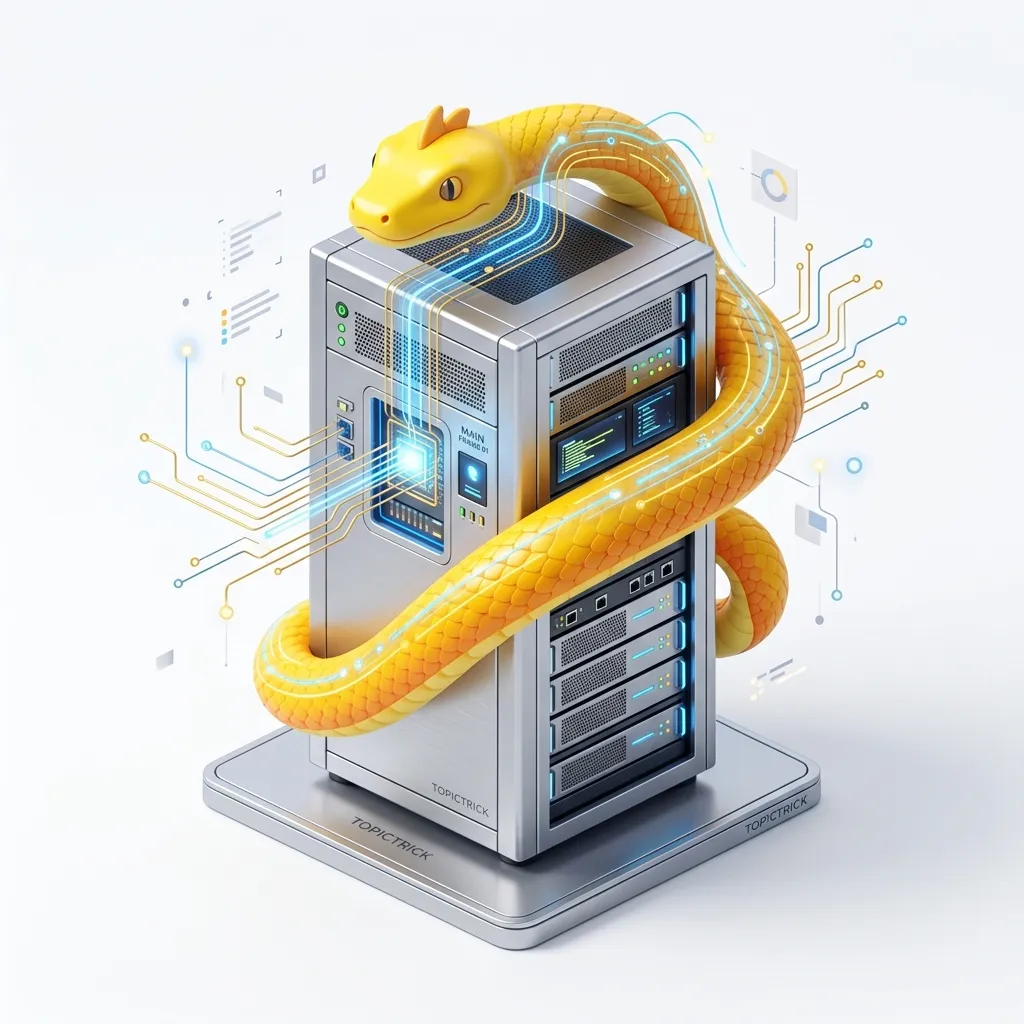
Python for Mainframe Modernization
In 2026, the most significant trend in mainframe computing isn't the migration off the platform, but the injection of modern languages onto it. Python has emerged as the primary "bridge" language, allowing a new generation of developers to interact with z/OS subsystems without needing to master decades of COBOL or Assembler.
This guide explores the architectural role of Python on the mainframe and how you can use it to modernize operations, analytics, and security.
Why Python on Z?
Historically, the mainframe was a "silo" of specialized languages. Today, IBM provides the IBM Open Enterprise SDK for Python, which is optimized for the z/OS environment.
- zIIP Offloading: Most Python workloads on z/OS can be offloaded to zIIP (z Integrated Information Processor), which means they don't count towards a company's general-purpose MIPS usage, making Python an extremely cost-effective choice for automation.
- Access to EBCDIC: The Python SDK includes built-in support for converting between ASCII/UTF-8 and EBCDIC (the mainframe's native character encoding), simplifying data integration.
- z/OS Library Access: Python can interact with VSAM files, DB2, and even execute JCL jobs via specialized libraries like
zoau(z/OS Accessories User).
Use Case 1: DevOps & Automation
Gone are the days of manual TSO/ISPF work for simple tasks. Python allows developers to build modern CI/CD pipelines for the mainframe.
- Job Management: Use Python scripts to submit JCL, monitor job status, and retrieve SPOOL output.
- Environment Setup: Automate the provisioning of test datasets and DB2 tables.
- Integration with Ansibe: Python is the engine behind the IBM z/OS Core collection for Ansible, enabling "Infrastructure as Code" on the mainframe.
Use Case 2: AI on Z (The Real Powerhouse)
The latest IBM Z processors (like the z16) feature on-chip AI acceleration. Python is the native tongue of AI.
- In-Transaction Inference: You can run a Scikit-learn or TensorFlow model directly on the mainframe to check for credit card fraud during the COBOL execution of the transaction.
- Latency Advantage: By running the AI model where the data lives (on the mainframe), you eliminate the network latency of sending data to a separate cloud-based AI service.
Use Case 3: Data Analysis & Bridging
Python's pandas and numpy libraries work perfectly on z/OS.
- ETL Replacement: Instead of writing complex COBOL programs to extract and transform data for external systems, you can use Python to read DB2 logs or VSAM files and expose the result as a modern JSON API.
Getting Started: Your First z/OS Python Script
Mainframe Modernization Tools
Prerequisites
- IBM Open Enterprise SDK for Python installed on your z/OS LPAR.
- UNIX System Services (USS) access.
- EBCDIC/ASCII orientation awareness.
The Hybrid Skill Set of 2026
The highest-paid engineers in 2026 aren't "just" Python developers or "just" Mainframe developers. They are Hybrid Engineers who understand:
- How to write clean Python code.
- How to navigate the z/OS UNIX filesystem.
- How to respect the data integrity and security patterns of the mainframe.
Conclusion
Python is not replacing COBOL; it is empowering it. By using Python as the "glue" layer, organizations can maintain the rock-solid reliability of their legacy data while providing the agility and AI-readiness that the modern business world demands.
Ready to bridge the gap? Start exploring the IBM Z Python ecosystem today. To build the underlying mainframe knowledge that makes Python integration meaningful, work through the Mainframe Mastery course — it covers COBOL, JCL, CICS, and DB2 from first principles. If you're approaching this from the Python side, the Python Mastery course covers the language fundamentals including data processing patterns with pandas and async I/O. For the COBOL foundation that Python bridges, start with the COBOL programming tutorial and the JCL tutorial.
Frequently Asked Questions
Q: Why is Python used for mainframe modernisation rather than just rewriting in Java or Go? Python's strengths align well with modernisation tasks: rapid prototyping lets teams validate business logic before committing to a full rewrite, rich libraries (pandas, SQLAlchemy, boto3) accelerate data migration and API integration, and Python scripts can be deployed alongside existing mainframe systems without replacing them overnight. Many modernisation projects use Python to extract and transform data from VSAM/DB2, expose COBOL business logic via REST APIs (using Zowe or IBM MQ bridges), and build reporting layers - all without a high-risk big-bang rewrite.
Q: How can Python interact with mainframe data sources like VSAM and DB2?
For DB2 on z/OS, use ibm_db (IBM's official Python driver) or connect via ODBC/JDBC bridges with pyodbc. For VSAM files, the most common approach is exporting them to flat files or CSV via JCL utilities (IDCAMS REPRO) and then processing with Python's csv module or pandas. For real-time integration, IBM MQ provides a Python client (pymqi) for message-based communication between Python services and CICS/IMS transactions.
Q: What Python tools are most useful for analysing legacy COBOL or JCL codebases?
For parsing and analysing COBOL source, the cobol-parsons and GnuCOBOL projects provide AST parsing that Python scripts can drive. Regular expressions handle JCL analysis - extracting DSN names, DD statements, and PROC calls. networkx is excellent for building dependency graphs of JCL jobs and programs. For migration planning, Python scripts that scan source directories, count COBOL verbs, identify CICS commands, and generate CSV reports give architects the data they need to scope and prioritise modernisation work.