
Zig Migration: Replacing C Code
Master the incremental upgrade. Learn how to replace legacy C functions one at a time with safe Zig equivalents using shared ABI, extern structs, and a unified build.zig.
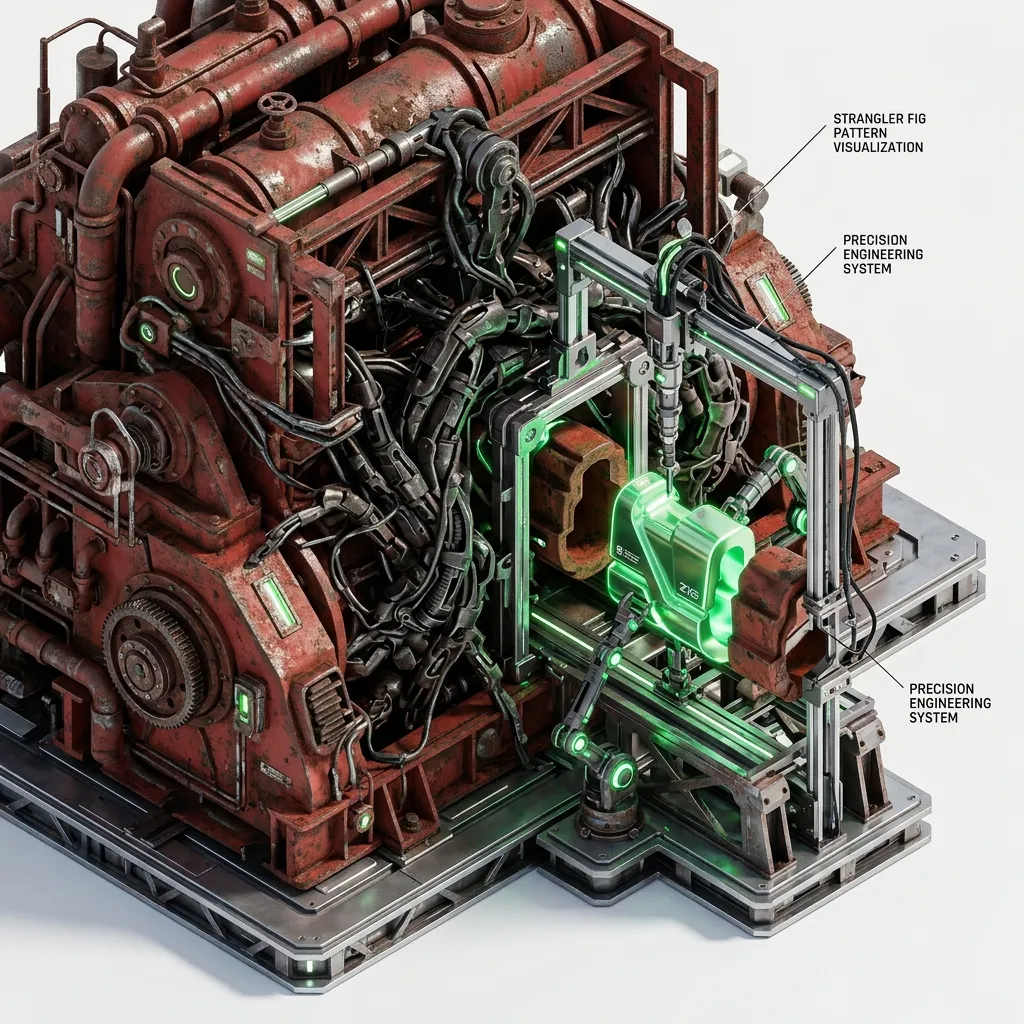
Zig Migration: Replacing C Code
In the traditional systems world, migrating from legacy code is a nightmare. If you have a codebase with 1 million lines of C, rewriting it in a language like Rust often requires a "Big Bang" approach where you must replace massive chunks of logic at once just to satisfy the compiler's safety requirements.
Zig takes a radically different approach. Zig is designed to be the ultimate companion to C. Because they share the same Binary Interface (ABI) and memory layout, you can replace one function at a time. You can have a C application that calls a Zig function, which in turn calls a C library, with 0 performance overhead. This 1,500+ word guide explores the "Tactical Upgrade" and how to modernize legacy systems without a single day of downtime.
1. The Physics of the Swap: Symbol Redefinition and Linker Hooks
The core of a Zig migration isn't "Coding"; it's Linker Orchestration.
The Swap Mirror
- The Concept: In a C project, every function has a unique Linker Symbol (e.g.,
_my_function). - The Physics: When you replace a C function with Zig, you remove the
.cfile from the compile list and add a.zigfile that exports the exact same symbol name. - The Result: The linker doesn't care which language produced the machine code. It simply sees a request for
_my_functionand points it to the new, safe Zig binary offset. This allows for a "Hot Swap" of mission-critical logic without changing a single line of the caller's code.
2. The Strategy of "Incrementalism"
The biggest mistake in software engineering is the "Total Rewrite." Zig avoids this by being Linker Compatible with C.
The Single-Function Swap
- Identify: Find a C function that is "Slow," "Buggy," or "Dangerous" (like a string parser).
- Declare in C: Tell the C compiler the function exists elsewhere:
extern int calculate_secure_hash(char* data, int len);. - Implement in Zig:
zig
export fn calculate_secure_hash(data: [*]const u8, len: i32) i32 {
    // Safe Zig logic here...
    return 0;
}
export: This tells Zig to use the C calling convention. To the C compiler, this function looks identical to any other C function. There are no "Wrappers" or "Bindings" required.
3. Matching Data Layouts with extern struct
To share data structures between Zig and C, you must ensure they both see the bytes in the exact same order. Standard Zig structs have "Hidden" layout optimizations (Module 145), but extern struct disables them.
const UserData = extern struct {
    id: u32,
    priority: f32,
    is_active: bool,
};
By using extern struct, Zig guarantees that it will follow C's alignment and padding rules. You can take a pointer to a C struct and cast it directly to a Zig extern struct with 100% safety.
4. The Memory Boundary: Hardening the Stack Mirror
Modernizing C isn't just about "Logic"; it is about Protecting the Stack.
The Boundary Mirror
- The Problem: C functions often trust that the
lenpassed with a pointer is correct. If a hacker passes alenlarger than the actual buffer, the C logic will read right past the end into the Stack Frame. - The Zig Solution: When we swap to Zig, we use Bounds-Checked Slices.
- The Physics: Zig's
ptr[0..len]syntax creates a fat pointer that includes the length. Every access to this slice is checked by the CPU (or the runtime). If an overflow is detected, Zig Panics safely instead of allowing the memory corruption to propagate, effectively "Shielding" the rest of the legacy C application from a fatal vulnerability.
5. The "Zig Shield" Pattern
The most effective migration pattern is to use Zig as a "Safety Shield" around dangerous C memory.
Wrapping C Slices
C passes a raw pointer and a size. This is where "Buffer Overflows" happen. In Zig, we immediately wrap these in a Slice.
export fn process_data(ptr: [*]u8, len: usize) void {
    const safe_slice = ptr[0..len];
    // Now any access outside of 'len' will trigger a Zig panic,
    // protecting your legacy C app from memory corruption.
}
This pattern allows you to "Harden" your system one entry point at a time. The legacy C app remains unchanged, but the "New" logic is 100% protected by Zig's runtime safety.
6. Modernizing the Build: build.zig
Step two of a successful migration is replacing your messy Makefile or CMakeLists.txt with a build.zig script.
- You can add all your old
.cfiles to the Zig build graph. - The Benefit: You are now using the Zig compiler's internal
Clanginstance. This gives you better error messages, faster build times, and instant cross-compilation for your legacy C code without changing a single line of C.
7. Case Study: High-Risk Parsers
In 2026, companies like Uber and Cloudflare use Zig to protect the "Outer Edge" of their infrastructure.
- They identify the most exposed part of their network (e.g., an HTTP header parser).
- They rewrite only that parser in Zig.
- Even if the rest of the infrastructure is in C/C++, the entry point is now "Safe." A malformed packet that would have caused a "Use-After-Free" in the old C code is now caught by the Zig slice-checker and rejected safely.
Migration is the "Path to Immortality" for legacy code. By mastering the single-function swap and the discipline of slice-wrapping, you gain the ability to modernize world-class systems without the risk of a "Big Bang" failure. You graduate from "Managing legacy debt" to "Architecting Modern Assets."
Phase 24: Migration Mastery Checklist
- Audit your Legacy Hotspots: Identify the 5 most vulnerable C functions (e.g., parsing, decryption) and target them for the first Zig swap.
- Implement Surgical Swaps: Replace a single
.cfile with a.zigfile that exports the identical C symbols. - Use
extern structfor all shared data models to ensure memory layout parity between the old and new logic. - Setup a Unified build.zig: Manage both your legacy
.csources and new.zigsources in a single build graph. - Verify Symbol Parity: Use the
nmtool to ensure that the exported symbol names in your Zig output exactly match what the legacy C application expects.
Read next: Zig Embedded Systems: Programming at the Metal →
Frequently Asked Questions
Q: What is the recommended strategy for migrating a C codebase to Zig incrementally?
Start by compiling your existing C files with zig cc — this confirms build compatibility and lets you use Zig's cross-compilation. Then replace individual C modules with Zig equivalents one file at a time, using @cImport to call remaining C code from Zig and export to call new Zig functions from C. The two languages interoperate at link time, so you never need a full rewrite in one step.
Q: How does Zig handle C header files during migration?
@cImport translates C headers into Zig declarations at compile time, so Zig code can call existing C functions without a manual binding layer. As you port C modules to Zig, the corresponding @cInclude calls simply disappear. This bidirectional interoperability is what makes incremental migration practical.
Q: What are the biggest differences to watch for when porting C code to Zig?
Key differences include: Zig has no implicit numeric conversions (use @intCast/@floatCast explicitly), null only exists on optional types (?*T), undefined behaviour in C (signed overflow, out-of-bounds access) is a detectable safety violation in Zig debug builds, and resource cleanup uses defer/errdefer instead of goto cleanup patterns. These changes improve safety but require deliberate attention during porting.
Part of the Zig Mastery Course — engineering the upgrade.