
Architectural Ethics & Technical Governance
Architecture is not just about performance; it is about responsibility. Learn how to lead technical governance, identify algorithmic bias at the hardware level, and understand the ethical implications of 'The Silent Skeleton'-the software that runs the modern world.
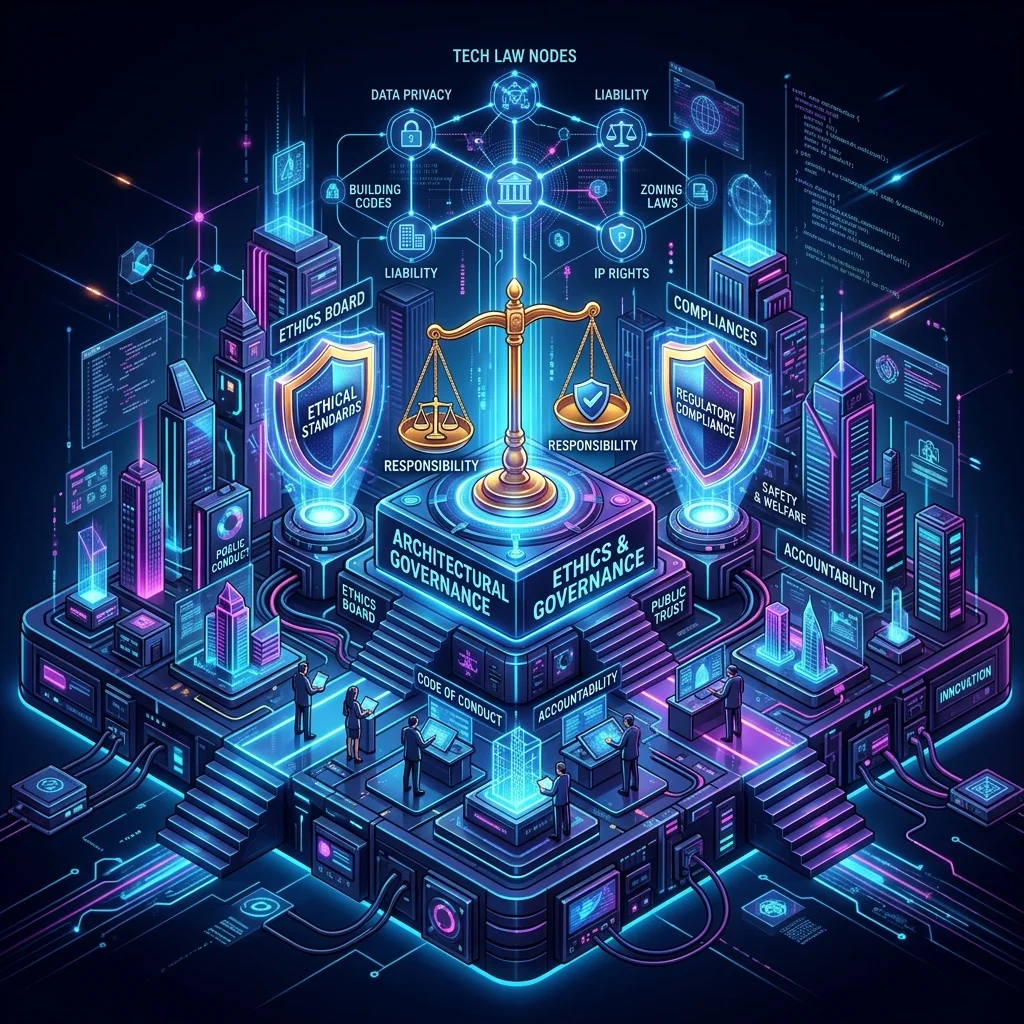
Architectural Ethics & Technical Governance
"Software has become the invisible skeleton of the modern world. If an architect builds a bridge that collapses, they are held responsible. If a software architect builds an algorithm that discriminates or a system that leaks personal data, the responsibility is no less real."
As we move toward a world dominated by AI, distributed systems, and ubiquitous computing, the role of the Software Architect has shifted from "Technical Advisor" to "Social Architect." The decisions you make-about data retention, encryption, or algorithm transparency-have real-world consequences for millions of people.
This 1,500+ word guide explores the Ethical Frameworks and Governance Models required to lead an engineering organization with integrity.
1. Architecture as Social Reality
Software is no longer just a tool; it is the Medium in which we live.
- The Loan Algorithm: Your decision to use a specific dataset can determine if a family gets a home.
- The Social Feed: Your decision to optimize for "Engagement" (CPU usage vs. User Time) can affect the mental health of an entire generation.
- The Emergency System: Your decision on "High Availability" can literally be a matter of life and death.
Hardware-Mirror Rule: Your ethics must extend to the physical world. Every kilowatt of electricity consumed by an unoptimized loop contributes to global carbon emissions. Optimization is a Sustainability Requirement.
2. The Ethics of "Good Enough"
Architects are always under pressure to ship faster.
- The Trap: Cutting corners on security or resilience to meet a quarterly goal.
- The Ethical Line: There is a difference between MVP (Minimum Viable Product) and MVS (Minimum Viable Security). An MVP can have fewer features, but it must never have "fewer ethics."
3. Algorithmic Bias at the Hardware Level
Bias is often described as a "Social" problem, but for an architect, it is a Data Pipeline Problem.
- The Source: If your AI training data is stored on hardware in only one region (e.g., US-East-1), it may lack the geographic and cultural diversity required for a global product.
- The Fix: Architect for Diverse Data Ingestion. Ensure your pipelines are designed to detect and flag outliers and imbalances before they reach the model training stage.
4. Professional Integrity: The Power of "No"
The most important word in an architect's vocabulary is "No."
- "No, we cannot launch without mTLS, even if it delays us by a week."
- "No, we cannot store user passwords in plain text for debugging."
- "No, we will not build a backdoor into our encryption."
Developing Your Compass: Use the "Front Page Test." If your architectural decision was printed on the front page of a newspaper, would you be proud of it?
5. Technical Governance: Leading without a Bottleneck
Governance is the set of rules and processes that ensure everyone is following the same standards.
- Light-touch Governance: Use ADRs (Architecture Decision Records) and RFCs (Request for Comments).
- Automated Governance: Use Linters, Policy Engines (OPA), and Build Gates.
- The Goal: Governance should feel like a "Golden Path" that makes it easier to do the right thing, rather than a "Police State" that blocks work.
6. Mentorship: The Architect's Real Legacy
In 10 years, your code will be deleted. The only thing that will remain of your work is the Engineers you Taught.
- Spend 20% of your time on Design Reviews that are educational, not judgmental.
- Create "Architectural Guilds" where senior and junior developers can debate patterns (e.g., GraphQL vs. REST).
- Sponsor diversity within the architecture group. A diverse group of architects builds more resilient, less biased systems.
7. Sustainability: The Carbon Cost of a Cycle
In 2026, Green Architecture is a core requirement.
- Data Center Selection: Architect your systems to run in regions powered by renewable energy.
- Efficiency: Transitioning from Python (Slow/Hot) to Go or Rust (Fast/Cool) for high-traffic services isn't just a performance win; it's a win for the planet.
- De-provisioning: A "Zombie" server consuming 400W of power while doing nothing is an ethical failure of governance.
Summary: The Custodian of the Future
An architect is more than a technical lead. You are the Custodian of the Future. By embedding ethics into your governance, prioritizing sustainability, and leading your team with integrity, you ensure that the "Invisible Skeleton" you are building is strong, fair, and enduring.
You aren't just connecting blocks; you are Building the Foundation of Trust. When you look back at your career, you won't remember the lines of code; you'll remember the systems you built that made people's lives better, safer, and more equitable.
Next Steps:
- Take the Final Architecture Capstone: Global Exchange to apply everything you've learned.
- Review the Architecture Decision Record (ADR) module to formalize your governance.
Part of the Software Architecture Hub - leading with purpose.