
Interactive Mock Test: Distributed Systems & Resilience
Test your knowledge with 20 scenario-based questions covering CQRS, Sharding, the Saga Pattern, Leader-Follower Replication, and the Circuit Breaker pattern.
What This Mock Exam Covers
This 20-question mock test covers the High-Scale, Distributed, Resilience, and Reliability phases of the Software Architecture Hub. You will test your understanding of Event-Driven design, CQRS, Saga Pattern, Space-Based Architecture, Sharding strategies, Leader-Follower DBs, Backend for Frontend (BFF), Circuit Breakers, and Zero Trust security.
Prepare for difficult scenario-based questions designed to test your system design interview readiness.
Section 1: Event-Driven & High Scale Patterns
1. In a heavily loaded ticketing application, the 'Checkout' button places the ticket request onto an Apache Kafka queue rather than saving it directly to a database, and the user sees a 'Processing...' screen. What architecture pattern is this?
2. What is the fundamental principle of the CQRS (Command Query Responsibility Segregation) pattern?
3. Event Sourcing is often paired with CQRS. In an Event Sourced system, what does the core database actually store?
4. You are architecting a high-frequency trading platform where database locking during massive concurrent writes is causing latency spikes. Which architecture pattern removes the database entirely from the critical transaction path?
5. What is 'Algorithmic Sharding' (Hash-Based Sharding)?
6. A major drawback of Directory-Based Sharding (lookup tables) over Algorithmic Sharding is:
7. You have a web application where 98% of the database operations are `SELECT` statements and 2% are `INSERT` statements. What is the standard architectural pattern to scale this?
8. What causes the 'Read-Your-Own-Writes' consistency problem in a Leader-Follower architecture?
Section 2: Distributed Resilience (Sagas & Circuit Breakers)
9. In a microservices architecture, you need to execute a business transaction spanning the Inventory service, Payment service, and Shipping service. Since you cannot use a distributed SQL transaction (2PC), what pattern must you use?
10. You implement an Orchestration Saga to handle orders. Who is responsible for telling the Payment Service to execute?
11. In the Saga pattern, what is a 'Compensating Transaction'?
12. What problem does the Circuit Breaker pattern solve in a microservice architecture?
13. In a Circuit Breaker, what does the 'Half-Open' state signify?
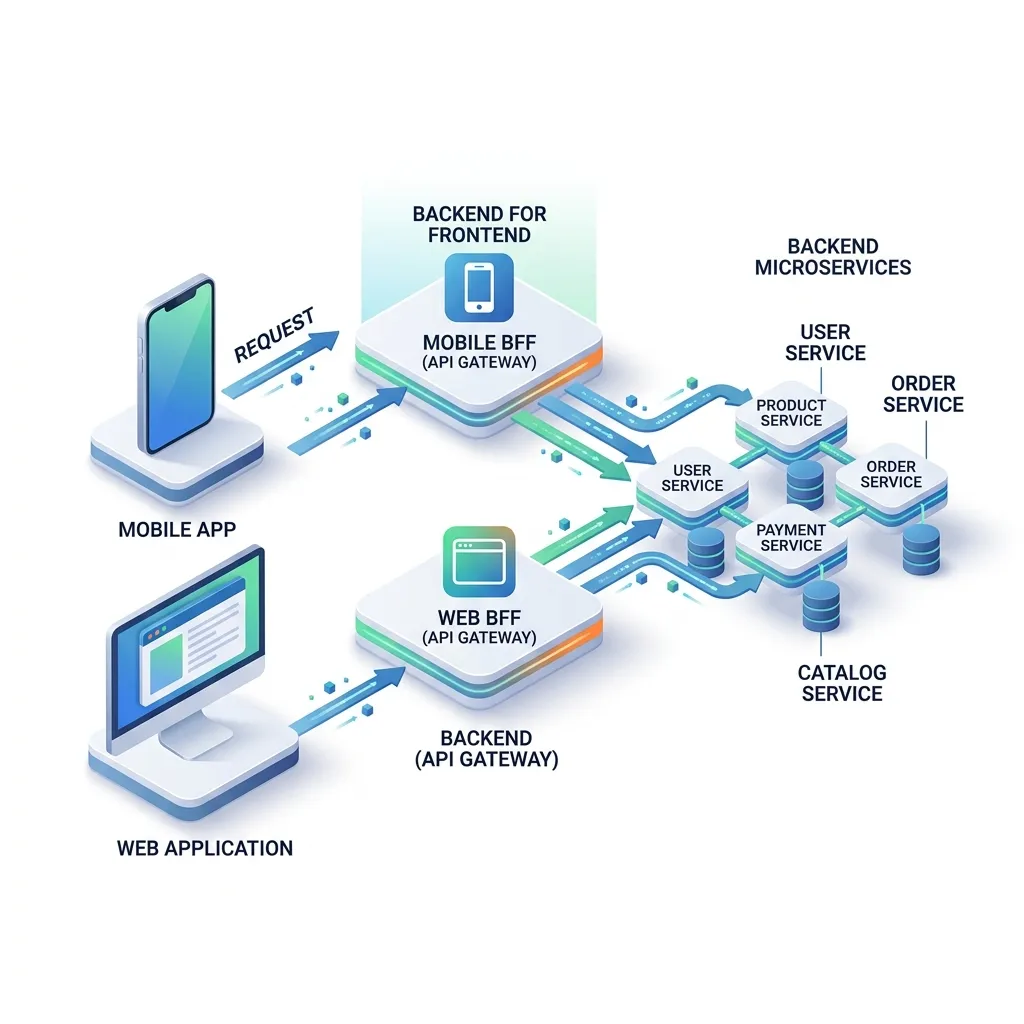
14. Your mobile app requires data from 6 different backend microservices to render the homepage, causing massive latency over cellular networks. Which pattern solves this?
Section 3: Data Fabric & Security Architectures
15. Traditional network security (VPNs, Firewalls) uses a 'castle and moat' approach. What is the fundamental assumption of Zero Trust Architecture?
16. How does a Service Mesh (like Istio) enable Zero Trust Architecture in Kubernetes?
17. In the context of Enterprise Data Architecture, what is the core philosophical difference between a Data Mesh and a Data Fabric?
18. Which architecture pattern treats 'Data as a Product'?
19. A microservice makes an API call to a 3rd-party vendor. The vendor is suffering a severe outage and taking 30 seconds to reply with a 500 Error. What happens if you DO NOT have a Circuit Breaker and you get 10,000 traffic requests?
20. You have an iOS app, an Android app, and a Web app. The teams want different data shapes. The backend team refuses to change their core Microservices. What should you build?
Summary
Scoring 15 or higher means you are highly capable of passing the system design components of senior engineering interviews.
Ready for the final stage? Let's move onto AI architectures, Edge compute, and enterprise strategy in the final mock exam: Interactive Mock Test 3: AI-Native & Strategy.