
TOGAF Green IT & Sustainability Architecture Guide
Integrate Green IT and ESG sustainability into the TOGAF ADM. Covers cloud optimisation, data lifecycle, circular economy, and carbon-aware architecture.
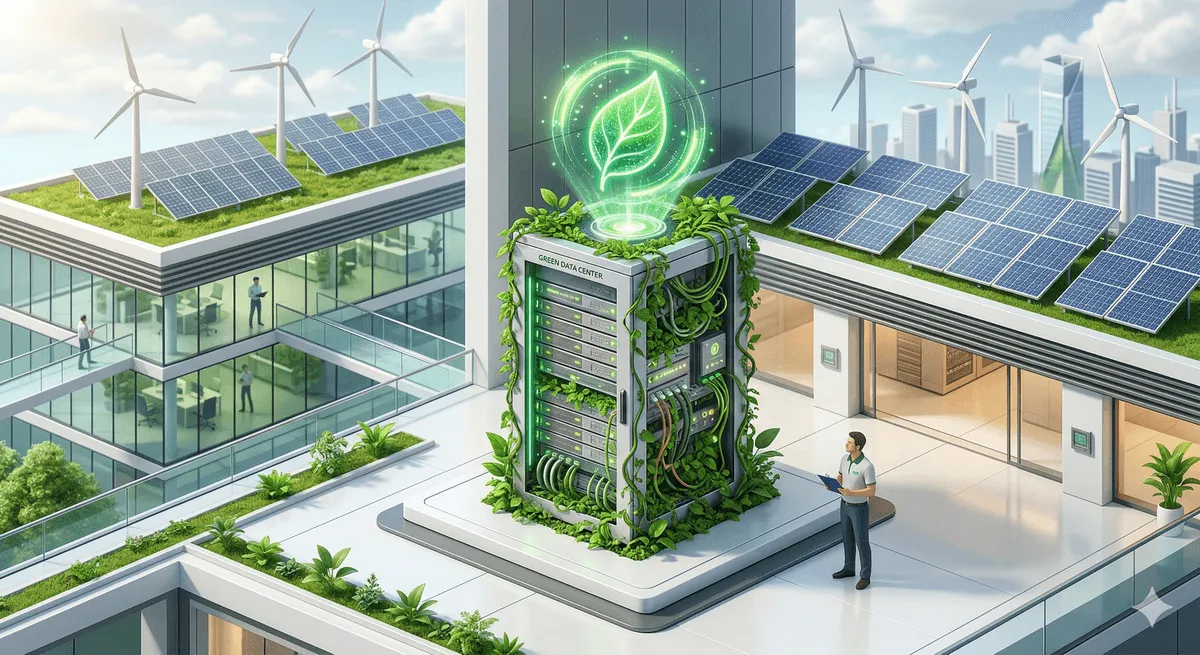
What is Green IT in Enterprise Architecture?
Green IT is the practice of designing, operating, and retiring IT systems in ways that minimize energy consumption, carbon emissions, and electronic waste. When integrated into the TOGAF ADM, sustainability becomes a guiding architecture principle rather than an afterthought - with measurable impact across every domain from business processes to technology infrastructure.
Enterprise Architecture (EA) is no longer just about profit and efficiency. In the modern world, it is also about Sustainability. As global organizations commit to Net Zero goals, the architect is the person who must design the systems that make these goals possible.
This is the world of Green IT-the practice of designing, building, and operating technical systems in a way that minimizes their environmental impact.
The ESG Driver in Architecture
ESG (Environmental, Social, and Governance) is the framework used by investors and regulators to measure a company's sustainability. In the TOGAF ADM, this driver belongs in the Preliminary Phase (as a guiding principle) and Phase A (as part of the Architecture Vision).
The Sustainability Principle
A sample architecture principle for Green IT might be:
"All technology decisions must prioritize energy efficiency and resource optimization to support the company’s commitment to a 50% carbon reduction by 2030."
Applying Sustainability to the ADM Phases
1. Phase B (Business Architecture)
Sustainability starts with the business process. Can we replace physical travel with remote collaboration? Can we digitize paper-based supply chains? Each of these decisions has an immediate carbon impact.
2. Phase C (Data Architecture)
Data is not "free." Storing and moving data consumes massive amounts of energy in data centers.
- Duplicate Data: De-duplication isn't just about saving storage space; it's about saving the electricity needed to power that storage.
- Data Lifecycle: Establishing a clear "Delete Policy" for old data is one of the most effective Green IT strategies.
3. Phase D (Technology Architecture)
This is where the biggest gains are made.
- Cloud Choice: Not all cloud regions are powered by renewable energy. Choosing a "Green Region" for your servers can reduce your footprint by up to 90%.
- Serverless & Elasticity: Using serverless architecture means you only use the power you need, when you need it. This eliminates "zombie servers" that sit idle but consume energy.
Measuring the Environmental Impact of Architecture Decisions
A sustainable enterprise architect does not work on intuition - they measure. Useful metrics to track include:
- Power Usage Effectiveness (PUE): The ratio of total data centre energy to IT equipment energy. A PUE of 1.0 is perfect; most commercial data centres sit between 1.2 and 1.5. Cloud providers like Google publish their average PUE and renewable energy percentage, which should factor into cloud region selection
- Carbon Intensity of Workloads: Tools like Cloud Carbon Footprint calculate the carbon emissions of cloud workloads per service and region, enabling architects to quantify the environmental cost of specific design choices
- Data Storage Growth Rate: Unmanaged data growth is one of the largest and most overlooked sources of IT carbon consumption. Architects should define data retention policies in Phase C and treat them as ESG commitments, not just operational housekeeping
- Hardware Refresh Cycles: Extending hardware life from 3 to 5 years can reduce the embodied carbon cost of IT infrastructure by up to 40%, according to research from the Gartner sustainability practice
Green Architecture Patterns by Domain
Integrating sustainability throughout the BDAT sequence produces architectures that are measurably more efficient:
Business Architecture (Phase B)
Identify processes that can move from physical to digital. Remote collaboration replacing business travel, electronic document signing replacing paper, and digital-first customer onboarding each reduce operational carbon at scale. Model the carbon reduction alongside the cost reduction in the business case.
Data Architecture (Phase C - Data)
Define a data lifecycle policy as a core data architecture output. Tiered storage - keeping hot data on fast SSD, warm data on cheaper HDD, and cold data on archival storage or deleting it - can reduce storage energy consumption by 60-70% compared to keeping all data on high-performance storage indefinitely.
Application Architecture (Phase C - Application)
Select cloud-native, serverless architectures for intermittent workloads. A serverless function that runs 10,000 times per day consumes zero energy between invocations. An always-on VM serving the same function consumes energy continuously, regardless of actual usage.
Technology Architecture (Phase D)
Prioritise regions with high renewable energy percentages when selecting cloud regions. AWS, Azure, and Google Cloud all publish renewable energy data by region. AWS's eu-west-1 (Ireland) and Google's europe-west1 (Belgium) are among the greenest options in Europe. Choosing these over less green alternatives at no additional cost is a straightforward sustainability win.
The Circular IT Economy
A sustainable architect looks at the entire lifecycle of an asset:
- Procurement: Buying from vendors with high energy-efficiency ratings.
- Maintenance: Extending the life of hardware rather than a frequent "refresh cycle."
- Decommissioning: Ensuring that old hardware is recycled or refurbished, not sent to a landfill.
Summary
Green IT is not "extra" work; it is Better Architecture. A system that is more energy-efficient is also more cost-effective and more resilient. By putting sustainability at the heart of your TOGAF practice, you are not just building a better company - you are building a better future.
The key Green IT actions across the ADM are:
- Define a sustainability principle in the Preliminary Phase and Phase A
- Model process digitisation as a carbon-reduction opportunity in Phase B
- Implement data lifecycle policies and de-duplication as Phase C governance outputs
- Select green cloud regions and serverless patterns in Phase D
- Track PUE and cloud carbon metrics as architecture KPIs in Phase H
In our final post of the series, we look at the next generation of the standard: TOGAF 10 vs 9.2 - What’s Next?
This post is part of the TOGAF 9.2 Masterclass series. Don’t forget to check out our previous post on Security Architecture: Integrating SABSA with TOGAF. For the Technology Architecture context in which these decisions are made, see our post on Phase D Technology Architecture.
Common Challenges Integrating Sustainability into TOGAF Architecture
Architecture principles lack teeth without governance enforcement Adding "Minimise Carbon Footprint" to the Architecture Principles list has no effect if the Architecture Board does not assess projects against it during compliance reviews. Sustainability principles must be operationalised: translate each principle into measurable architecture requirements (e.g., "all new cloud workloads must be deployed in regions where the cloud provider uses >=70% renewable energy") and include these in the Architecture Requirements Specification.
Energy efficiency is treated as a technology concern, not a business concern Green IT decisions - whether to consolidate servers, which cloud region to use, how frequently to refresh hardware - have direct cost and risk implications that belong in business architecture discussions. Phase B should document sustainability as a business capability driver, not leave it to Phase D infrastructure decisions. Business architects who understand the financial and regulatory implications of energy use make stronger cases to leadership than technology architects citing watts per transaction.
Lifecycle assessment is rarely part of the Technology Portfolio Catalogue Most Technology Portfolio Catalogues track vendor, version, and end-of-support dates, but not embodied carbon (the carbon cost of manufacturing and shipping the hardware) or end-of-life disposal obligations. Extending the Technology Portfolio Catalogue to include these fields enables architecture decisions that account for the full environmental lifecycle of technology assets.
External references for sustainability architecture:
- The Open Group TOGAF standard - sustainability is addressed in TOGAF 10's guidance on architecture principles and Phase D technology standards
- Green Software Foundation - carbon-aware software design patterns applicable to Phase C Application Architecture
Frequently Asked Questions
How does TOGAF address environmental sustainability? TOGAF 10 includes sustainability as an explicit architecture consideration, recognising that environmental impact is a legitimate business driver alongside cost, risk, and agility. The Preliminary Phase should establish sustainability principles alongside other governance principles. Phase B can document carbon reduction as a business capability target. Phase D technology standards can specify energy efficiency requirements for approved infrastructure. The Open Group also publishes supplementary Green Architecture guidance as part of its broader standards portfolio.
What is the role of cloud architecture in sustainable enterprise architecture? Cloud infrastructure, when used efficiently, can reduce an organisation's overall carbon footprint: hyperscale cloud providers operate data centres at higher utilisation rates than typical on-premises infrastructure, and many offer 100% renewable energy commitments in specific regions. However, cloud migration alone does not guarantee sustainability - poorly architected cloud workloads (over-provisioned instances, data stored in multiple regions unnecessarily, underutilised services) can increase energy consumption. Sustainable cloud architecture requires right-sizing, auto-scaling, region selection based on carbon intensity, and active monitoring of cloud consumption. The Sustainable Web Design guidelines apply at the application architecture level.
What metrics should a Green IT architecture framework track? Key sustainability metrics for enterprise architecture include: Power Usage Effectiveness (PUE) for data centres (target ≤1.2 for modern facilities); Carbon Usage Effectiveness (CUE); server utilisation rates (virtualization or cloud consolidation targets); embodied carbon per device across the hardware lifecycle; and application-level metrics such as energy per API request or energy per transaction. These metrics should feed into the Architecture Repository and be reviewed as part of the Technology Portfolio Catalogue management process.
Part of the TOGAF 9.2 Masterclass.