
Blackboard Architecture Pattern Explained (2026)
Blackboard architecture uses shared state, Knowledge Sources, and a Control component. How the parts coordinate, with Python and LangGraph code. 2026.
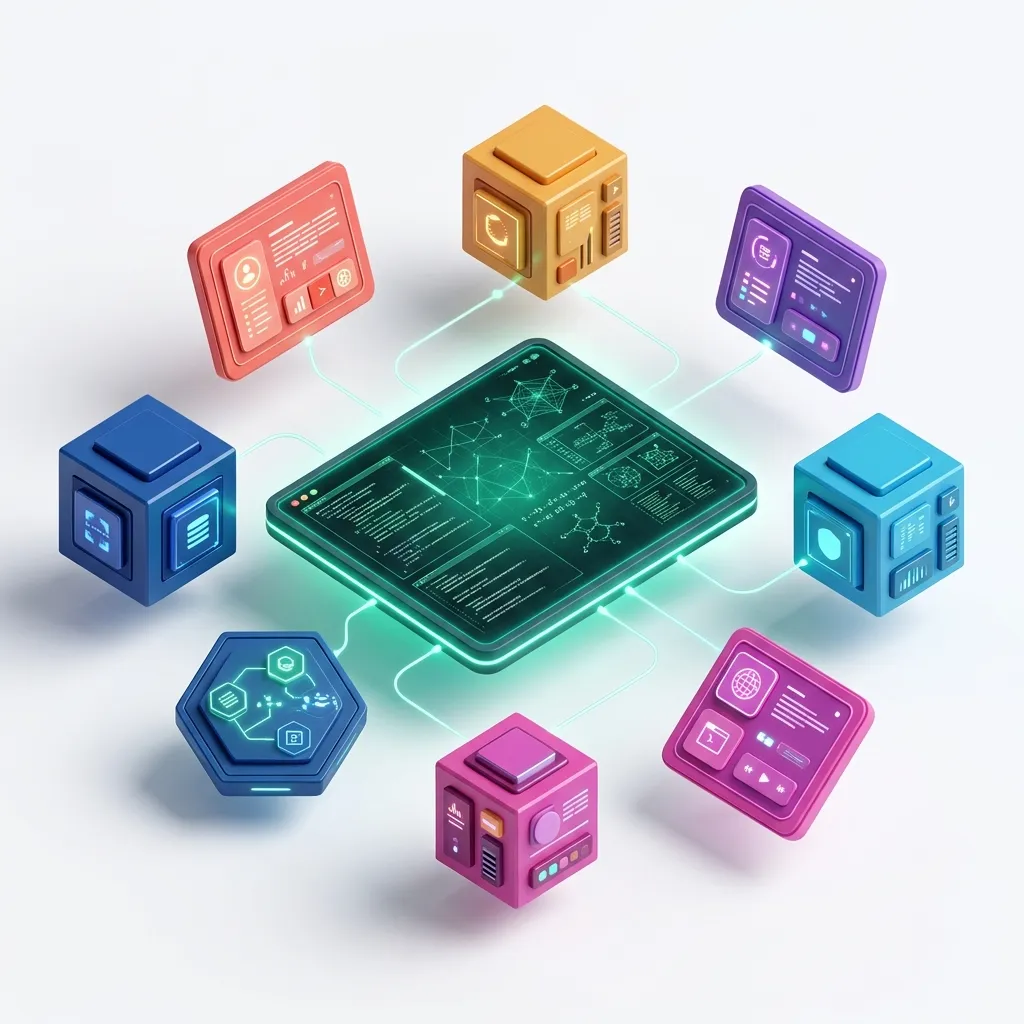
Blackboard Architecture: The Multi-Agent AI Pattern Making a Comeback in 2026
Table of Contents
- Origins: 1980s AI and Speech Recognition
- The Three Core Components Explained
- How the Problem-Solving Loop Works
- The Modern Revival: Why Blackboard for LLMs?
- Implementing a Modern Blackboard in Python
- Control Component: Four Scheduling Strategies
- Handling Conflicts Between Knowledge Sources
- Blackboard vs Orchestrator-Subagent vs Pub/Sub
- Real-World Use Cases in 2026
- Frequently Asked Questions
- Key Takeaway
Origins: 1980s AI and Speech Recognition
The Blackboard Architecture was invented in 1977 by the HEARSAY-II project at Carnegie Mellon University - a speech recognition system that had to interpret spoken sentences. The problem: no single algorithm could handle all aspects of speech recognition simultaneously:
- Phoneme recognizer: Identifies sounds
- Word recognizer: Groups phonemes into candidate words
- Syntactic analyzer: Checks grammatical structure
- Semantic interpreter: Ensures meaning is coherent
Rather than connecting these in a rigid pipeline, HEARSAY-II let each module write its hypotheses to a shared "blackboard." Other modules could see these hypotheses and contribute their own analysis. This collaborative, opportunistic problem-solving breakthrough became the foundation of modern speech recognition.
The Three Core Components Explained
The Blackboard
A structured shared memory space containing:
- Current hypotheses: Partial answers with confidence scores
- Problem state: What stage of solving we're at
- Evidence: Raw data, search results, tool outputs
- Derived conclusions: Validated, synthesized information
The Blackboard is NOT passive storage - it is the reasoning surface the entire system writes to and reads from.
Knowledge Sources (Specialists)
Each Knowledge Source (KS) is:
- Independent: Doesn't communicate with other KS directly
- Specialized: Has one expertise area
- Conditional: Only activates when the Blackboard state matches its preconditions
- Contributory: Reads current state, adds its contribution, writes back
Control Component
The "Orchestrator" responsible for:
- Monitoring the Blackboard for state changes
- Evaluating which Knowledge Sources' preconditions are satisfied
- Selecting which KS to activate next (using a scheduling strategy)
- Deciding when the problem is solved
The Modern Revival: Why Blackboard for LLMs?
Single LLM prompts fail for complex, multi-step tasks because:
- They hallucinate when tasks require multiple sequential verification steps
- Context windows limit how much reasoning can happen in one prompt
- No single LLM excels at all sub-tasks simultaneously (research, math, code, writing)
The Blackboard pattern solves this by decomposing the problem:
| LLM Agent (Knowledge Source) | Precondition | Contribution |
|---|---|---|
| Research Agent | Problem stated on Blackboard | Adds web search results |
| Fact-Checker | Research results available | Marks claims as verified/unverified |
| Code Executor | Code block detected in research | Runs code, adds output |
| Contradiction Detector | Multiple claims available | Flags inconsistencies |
| Synthesis Writer | All verified facts available | Writes final answer |
The Control Component might use GPT-4 or Claude to decide which agent runs next - making the system's reasoning process itself AI-driven.
Implementing a Modern Blackboard in Python
from dataclasses import dataclass, field
from typing import Any, Callable
from enum import Enum
import asyncio

class ProblemStatus(Enum):
    INITIALIZED   = "initialized"
    RESEARCHING   = "researching"
    FACT_CHECKING = "fact_checking"
    SYNTHESIZING  = "synthesizing"
    COMPLETE      = "complete"

@dataclass
class Blackboard:
    """Shared working memory for all Knowledge Sources."""
    problem: str = ""
    status: ProblemStatus = ProblemStatus.INITIALIZED

    # Evidence contributed by Knowledge Sources:
    search_results: list[dict] = field(default_factory=list)
    verified_facts: list[dict] = field(default_factory=list)
    code_outputs: list[dict] = field(default_factory=list)
    contradictions: list[str] = field(default_factory=list)

    # Intermediate hypotheses:
    hypotheses: list[dict] = field(default_factory=list)

    # Final output:
    answer: str | None = None
    confidence: float = 0.0

@dataclass
class KnowledgeSource:
    name: str
    precondition: Callable[[Blackboard], bool]  # When can I activate?
    action: Callable[[Blackboard], None]         # What do I contribute?
    priority: int = 1

# Knowledge Sources:
researcher = KnowledgeSource(
    name="Researcher",
    precondition=lambda bb: bb.status == ProblemStatus.INITIALIZED,
    action=lambda bb: (
        bb.search_results.extend(web_search(bb.problem)),
        setattr(bb, 'status', ProblemStatus.RESEARCHING)
    ),
    priority=10
)

fact_checker = KnowledgeSource(
    name="FactChecker",
    precondition=lambda bb: len(bb.search_results) > 0,
    action=lambda bb: (
        bb.verified_facts.extend(verify_claims(bb.search_results)),
        setattr(bb, 'status', ProblemStatus.FACT_CHECKING)
    ),
    priority=8
)

synthesizer = KnowledgeSource(
    name="Synthesizer",
    precondition=lambda bb: len(bb.verified_facts) >= 3,
    action=lambda bb: (
        setattr(bb, 'answer', synthesize(bb.verified_facts, bb.problem)),
        setattr(bb, 'status', ProblemStatus.COMPLETE),
        setattr(bb, 'confidence', 0.9)
    ),
    priority=5
)

class ControlComponent:
    def __init__(self, knowledge_sources: list[KnowledgeSource], blackboard: Blackboard):
        self.ks = sorted(knowledge_sources, key=lambda k: k.priority, reverse=True)
        self.bb = blackboard

    def select_next(self) -> KnowledgeSource | None:
        """Priority-based scheduling: highest priority eligible KS wins."""
        for ks in self.ks:
            if ks.precondition(self.bb):
                return ks
        return None

    async def run(self) -> Blackboard:
        while self.bb.status != ProblemStatus.COMPLETE:
            next_ks = self.select_next()
            if next_ks is None:
                break  # No KS can make progress - stuck
            print(f"[Control] Activating: {next_ks.name}")
            next_ks.action(self.bb)
        return self.bb

# Usage:
bb = Blackboard(problem="What are the environmental impacts of large language models?")
ctrl = ControlComponent([researcher, fact_checker, synthesizer], bb)
result = asyncio.run(ctrl.run())
print(result.answer)
Control Component: Four Scheduling Strategies
| Strategy | Description | Best for |
|---|---|---|
| Priority Queue | Always activate the highest-priority eligible KS | Structured problems with known stage order |
| Round-Robin | Each eligible KS gets a turn | Parallel, peer expertise |
| Focus Value | Rate each KS's likely contribution; highest rating wins | Complex problems with variable KS relevance |
| AI-Driven | Use an LLM to decide which KS activates next based on blackboard state | Dynamic, open-ended research tasks |
Blackboard vs Orchestrator-Subagent vs Pub/Sub
| Aspect | Blackboard | Orchestrator-Subagent | Event-Driven Pub/Sub |
|---|---|---|---|
| Communication | Through shared state | Direct delegation | Event topics |
| Coupling | Loose (via Blackboard) | Medium (orchestrator knows agents) | Loose (publish only) |
| Reasoning | Emergent (state-driven) | Explicit (orchestrator decides) | Reactive (event-triggered) |
| Best for | Complex collaborative reasoning | Known workflow with subtasks | Decoupled processing pipelines |
| LLM Framework | LangGraph state | LangChain AgentExecutor | Kafka + consumer agents |
Real-World Use Cases in 2026
-
Medical Diagnosis Assistance: Multiple specialist agents (Radiologist KS, Pathologist KS, Pharmacist KS) contribute to a shared diagnosis Blackboard - no single agent can see the full patient picture, but collectively they build the complete assessment
-
Automated Code Review: Security analyst KS, performance profiler KS, style checker KS, documentation validator KS all write findings to a shared review Blackboard - final reviewer synthesizes into actionable comments
-
Financial Risk Assessment: Market data KS, regulatory compliance KS, historical correlation KS, portfolio exposure KS collaborate to produce a risk rating
-
Scientific Literature Review: Search KS fetches papers, critical analysis KS evaluates methodology, synthesis KS builds the literature map
Frequently Asked Questions
How does Blackboard differ from a simple message queue? A message queue (Kafka, RabbitMQ) is uni-directional - producers write, consumers read, and they don't see each other's outputs in a shared reasoning context. The Blackboard is a shared reasoning surface - every Knowledge Source can read what all other Knowledge Sources have contributed and build incrementally on their work. This collaborative, additive problem-solving is fundamentally different from independent processing.
What prevents Knowledge Sources from conflicting? Conflicts are expected and handled by the Control Component. A dedicated Contradiction-Detector Knowledge Source can be activated when conflicting claims appear on the Blackboard. The Control Component may then activate a Mediator or ask the conflicting KSes to re-evaluate with additional context. This conflict resolution is a feature, not a bug - it's how the system reasons through ambiguity.
Key Takeaway
Blackboard Architecture gives multi-agent AI systems the same collaborative reasoning capability that teams of human experts have: each specialist contributes their domain expertise to a shared context, building on each other's work without needing to communicate directly. As LLM capabilities continue to advance, the Blackboard pattern is emerging as the dominant architecture for AI systems that need to tackle complex, multi-faceted problems - from medical diagnosis to scientific research to legal analysis. Understanding it is essential for architects designing the next generation of AI-powered software.
Read next: AI-Native Architecture Design: Models, Routers, and RAG ->
Part of the Software Architecture Hub - comprehensive guides from architectural foundations to advanced distributed systems patterns.